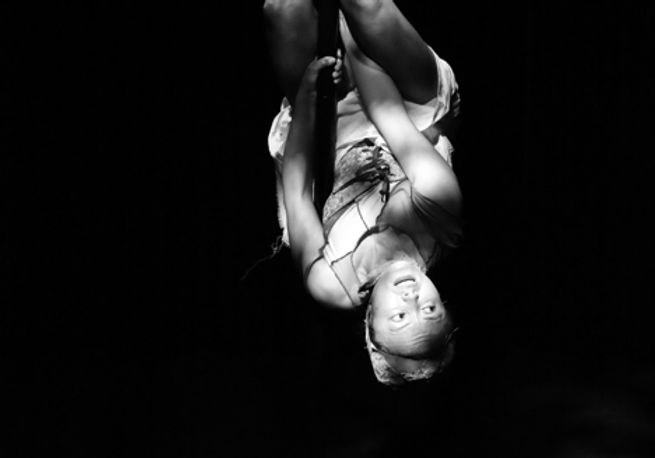
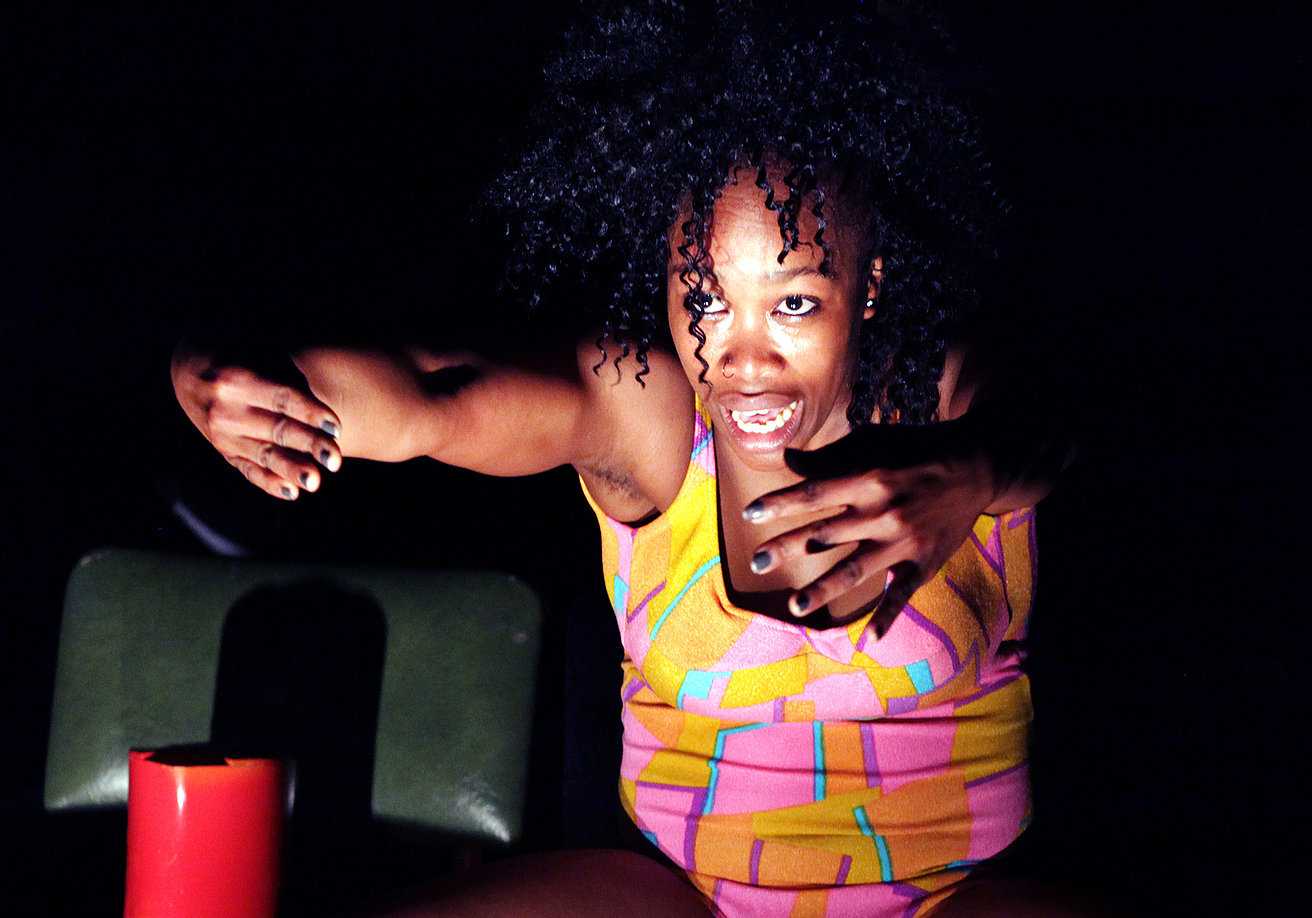
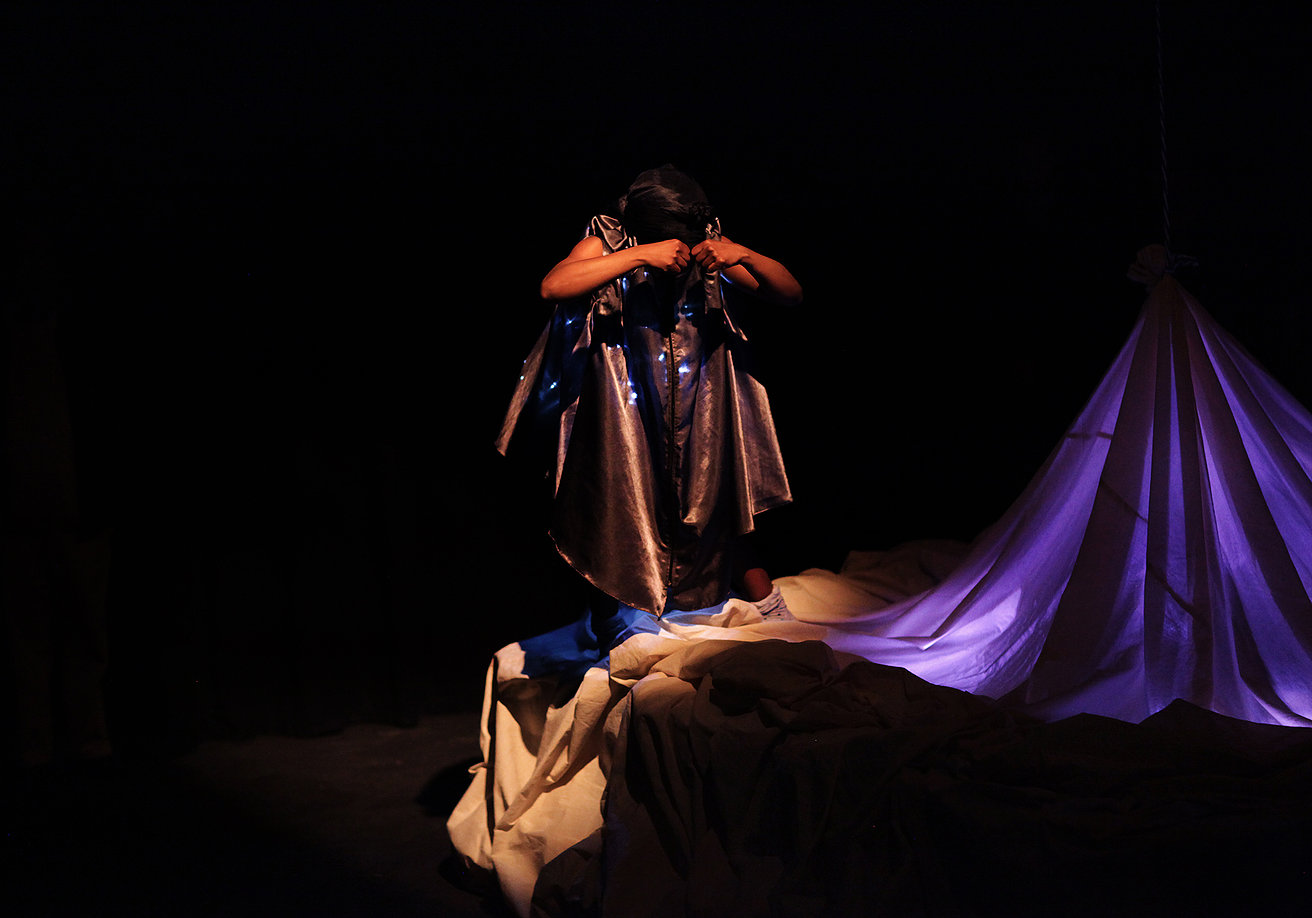
The production weaves the stories of three women: Draupadi from the Indian Epic, The Mahabarata; Catrijn (1631-1682), the first recorded female convict slave banished to the Dutch-occupied Cape of Good Hope; and Zara (1648-1671), a Khoikhoi woman born in the Cape. The catalyst for the text sprang from Abrahams' investigation into her motherline and the Khoikhoi DNA that roots her to South African beginnings.
Conceptualised by Rehane Abrahams and Sara Matchett Written and performed by Rehane Abrahams Directed by Sara Matchett Designed by Craig Leo Sonic-scape by Lukhanyiso Skosana Produced by The Mothertongue Project
Qash-Qash
P4 Studio, Hiddingh Campus
The necessity for Qash-Qash is found in the following consideration: that the black subject's discourse is today one of extreme displacement. This discourse is spoken, perhaps, by thousands of subjects, but warranted by less; it is completely abandoned by the surrounding languages.
Conceptualised by Nomcebisi Moyikwa Technical team: Mlondi Dubazane, Tobias Ngomane, Lebogang Fischer, Ashwin May
Reimagining The Native Who Caused All the Trouble
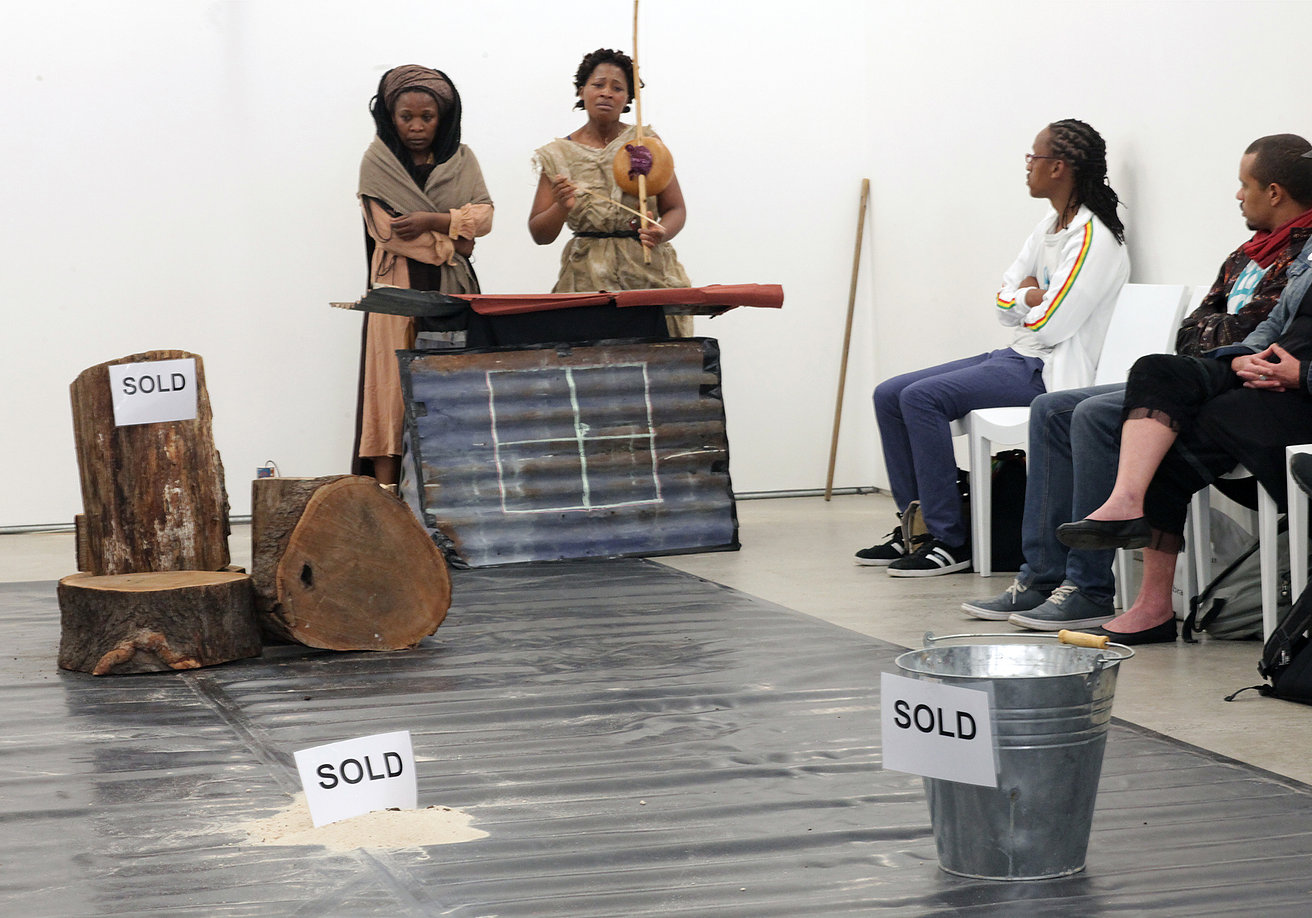
Director Nwabisa Plaatjie reimagines The Native Who Caused All the Trouble which was first presented at the Market Theatre in 1983. The play was based on a true story that took place in 1937 when a deeply religious man who got evicted from his land refused to leave because he believed that all land belongs to God.
Cast: Faniswa Yisa, Duane Behrens, Nomakrestu Xakathugaga, Kai Luke Brummer, Anele Kose Technical Support: Bunto Tyali *This work was created with the support of The Theatre Arts Admin Collective Emerging Theatre Director's Bursary
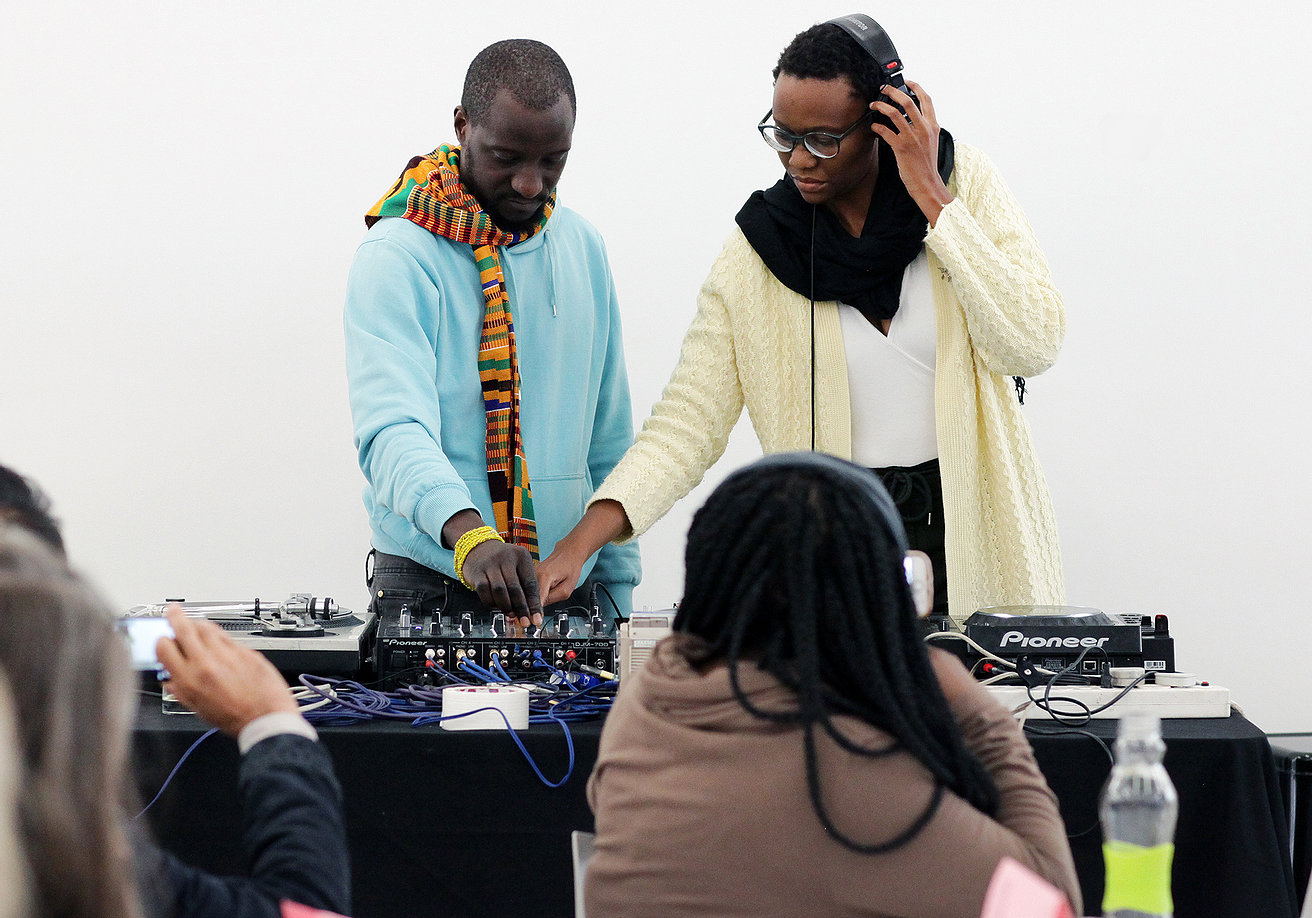
Listening to a listening at Pungwe
A conversation between Robert Machiri and Memory Biwa
The artists perform through an experimental platform, Pungwe Nights, to track and reimagine transnational sonic cultures in southern Africa. They re(hear)se historical and contemporary recordings between Namibia and Zimbabwe on a reel-to-reel player, turntables and computer. Their practice with sound technology has parallel currents, drawing on research on the use of African bodies in phonetic experiments in colonial linguistics and ethnomusicology.